Clear Vision Starts with Quality Eye Care
Healthy eyes don't always mean healthy vision. Many eye diseases develop without noticeable symptoms or warning signs, according to the National Eye Institute. That's why routine eye exams are important, even when your vision seems fine.
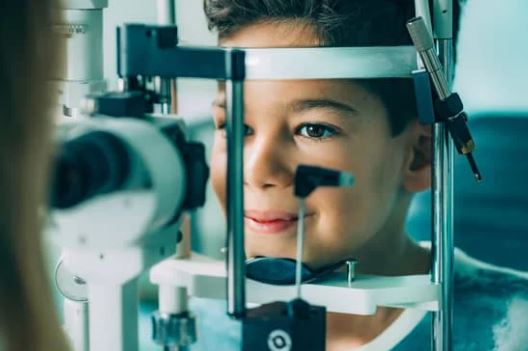
DePaul offers examination of the eyes at our Carrollton location, as well as in-house primary and pediatric optical lab services. You also have access to discounted eyeglasses and contact lenses.
Our optometry department detects, manages and treats the following eye problems, along with providing annual eye visits:
-
Nearsightedness
-
Farsightedness
-
Astigmatism
-
Digital Eye Strain
-
Eye Infections
-
Eye Allergies
-
Corneal Abrasion
-
Dry Eyes
-
Glaucoma
-
Cataracts
-
Diabetic Eye Disease
-
Dry Eye Syndrome
-
Red Eyes
-
Eye Injuries
-
Keratoconus
-
Retinal problems
Meet Our Optometrist
 Dr. Seth Stanton
Dr. Stanton earned his Doctor of Optometry from the Illinois College of Optometry and his bachelor's degree in molecular biology from Tulane University. He is a member of several professional and community organizations and has volunteered his optometric services in Honduras. Dr. Stanton is also proficient in Spanish.
Did you know?
-
The number of people with visual impairment or blindness in the United States is expected to double to more than 8 million by 2050.
-
Over half of Americans have difficulty seeing due to correctable refractive errors such as myopia (nearsightedness), hyperopia (farsightedness), or presbyopia (difficulty reading after age 40) that can be fixed with glasses, contacts or surgery.
-
It is projected that the number of people with legal blindness will increase by 21% each decade to 2 million by 2050.
-
By 2050, 2.15 million non-Hispanic white women are expected to be visually impaired and 610,000 will be blind.
-
African Americans currently account for the second highest proportion of visual impairment, but that is expected to shift to Hispanics around 2040, as the Hispanic population—and particularly the number of older Hispanics—continues to grow. Hispanics have particularly high rates of diabetes, which is associated with diabetic eye disease, a treatable cause of visual impairment.